Hobbyist Programmers Have Been Gaslit for Too Long
Last updated: October 09, 2024
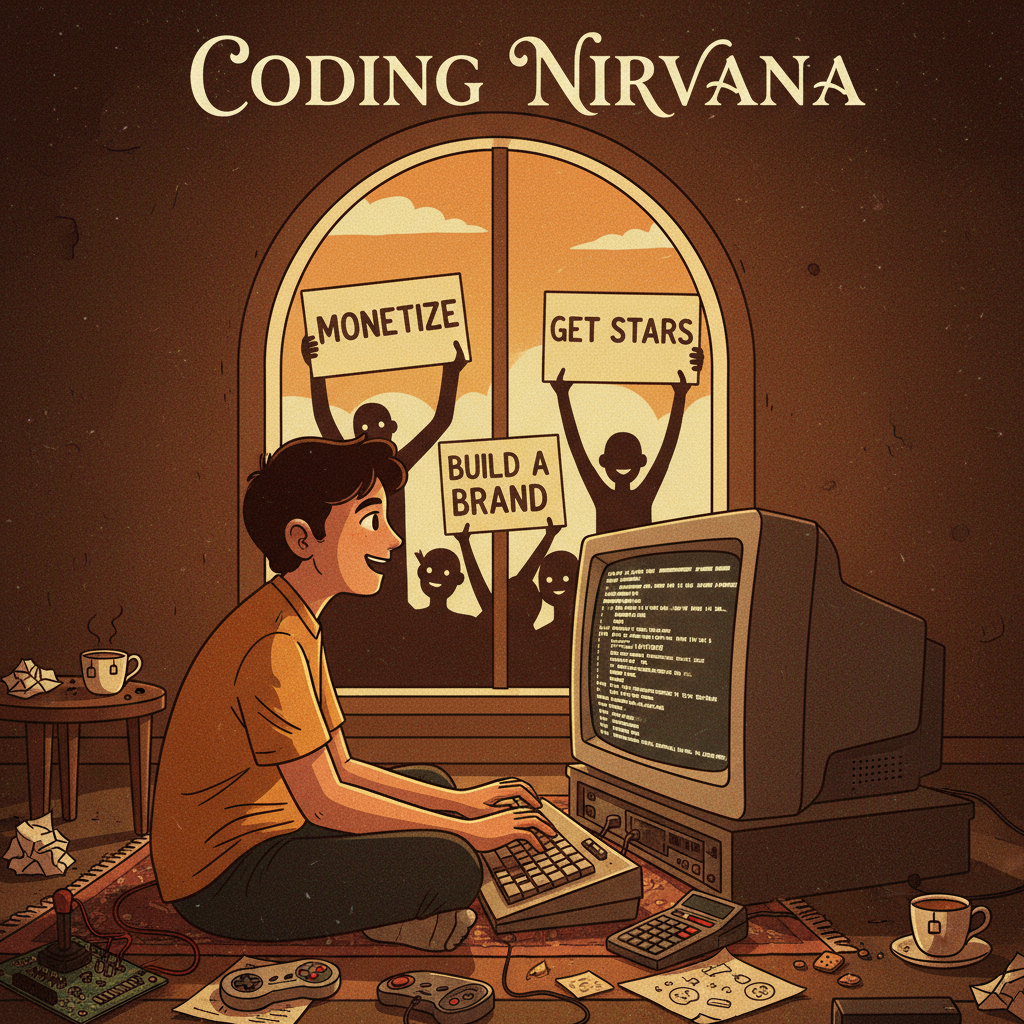
As a child I didn't have any other hobby other than programming and computing. My parents tried, and I also tried. Cricket, Origami, Football, Painting, Dancing, Singing. This year, for a health challenge at work, we were asked to pick a hobby and work on it. I tried picking up drumming. Nothing really stuck. The drumming thing eventually made me realize something I'd been avoiding for years: the only hobby that has ever stuck with me is programming.
The problem is that programming is a productive hobby. And because it's productive, there's an entire ecosystem of content and community pressure that makes you feel like you're doing it wrong if you're not monetizing it, or building a career out of it, or at minimum growing a GitHub following. You end up gaslit into thinking that what you love isn't a real hobby.
I've been programming since I was a kid, and I can trace this feeling back to the beginning. In school, I was the one helping teachers with computers, typing things up for them, setting up projectors, doing all the IT work in Word and Excel. I taught my grandmother how to use a computer, and she ended up translating Economics textbooks from English to Hindi and publishing them. I always felt like I had a hobby, but I was shamed into finding other hobbies to pass my time. As if computing was something you did for work, not for fun.
Gaming was the same thing, really. I'd spend hours optimizing my machine to squeeze out maximum FPS. Writing forum posts, sharing tips and tricks online. Running and maintaining game servers with strangers on the internet for MMOs like Habbo Hotel so you didn't have to spend real money. That was the hobby. But nobody called it that.
In college it got worse. I did inane things just to get internet working, for the fun of it. Got hold of someone's TI calculator and set up functions on it. Helped professors with LaTeX, deep down not for the research aspect but because it was an archaic mess that I could go into the rabbit hole and figure out for them. Hacked on my Raspberry Pi, used it to host torrents for the campus intranet via DHT. But you always got lampooned if you were too serious about this stuff.
I ended up doing GSoC in college, partly because it was a good way to pursue programming as a hobby without being ridiculed. It had legitimacy. It was Google, after all. But when I went to the meetups and communities around GSoC, I realized that the majority of people there were doing it for the money and building a career, not for the joy of it. That stung a bit.
There are a few specific ways this gaslighting works. One is the idea that programming is only valuable if it's monetized, that your hobby is a waste of time unless it leads to a career or income. Another is that side projects don't count unless they're serious, with a clear market or purpose beyond enjoyment. People belittle smaller, fun projects, and that kills the creative exploration of building something just because you wanted to see if you could. And then there's the open-source pressure, that you're not a real programmer unless you contribute to open-source and get publicly validated by the community. Never mind that you might be perfectly happy coding for yourself.
It can be disheartening when something you love, and are naturally drawn to, gets minimized because it doesn't fit into a narrow view of what a hobby "should" be.
I used to be part of various subreddits, Slacks, Telegrams, hobbyist programming communities in India. We had a small group that would float between different platforms, showcasing side projects on GitHub. That community has pretty much died. Hackathons used to be fun here too. They were a new concept, and people went to build crazy things with no strings attached.
Now, meetups are all about getting jobs. Showcasing projects for traction or stars. Monetizability. "Building communities" around projects to get contributors. Corporate promotion. Product building. The whole thing shifted, and I got slowly disinterested.
I've been thinking about what a space that reverses this would look like. How do you build safe, long-lasting communities for hobby programmers? How do you help people like us write more, share more, and actually get others to read and comment on it? How do you undo the damage and mistrust left by communities that turned everything into a hustle?
I keep coming back to a few ideas. What if there was a different format for meetups? I really liked how Defcon does puzzle booths, where people make puzzles and you have to solve them live with code. What if there was something like Product Hunt but private and hyperlocalized, where you could show off what you made to a small group of people who actually care?
That's what I'm trying to figure out with oddship.net. I don't have all the answers. But I know that hobbyist programmers have been made to feel like their love for computing isn't enough, and I think it's time we stopped accepting that.